Choosing the right pickleball paddle can feel overwhelming when hundreds of new models hit the market every year. With participation surging past 24 million players in the U.S. and paddle technology evolving faster than ever, the question every player asks is the same: which paddle actually performs across all skill levels? This guide breaks down the key traits, technologies, and categories that define a top-performing paddle in 2026 so you can make a confident choice whether you are picking up your first paddle or competing in tournaments.
What Makes a Paddle the Top Choice?
A top-choice pickleball paddle is one that balances power, control, spin, forgiveness, and stability without forcing a player into one extreme style. According to Pickleball.com's 2026 guide, the modern market has shifted toward paddles that combine controlled power with forgiveness rather than pure trampoline-effect pop.
The best paddle is the one that helps you play confidently and consistently under pressure. That principle applies whether you are a 3.0 recreational player or a 5.0 tournament competitor. At Godfather Pickleball's paddle collection, every model is curated with that philosophy in mind.
Why All-Court Paddles Dominate in 2026
An all-court paddle is a paddle designed to deliver competitive power, reliable control, and consistent spin without requiring the player to sacrifice one attribute for another. After three years of the so-called "power wars," reviewers and pros agree that the all-court category has quietly become the best segment for long-term improvement.
Independent testers at Matt's Pickleball have measured over 520 paddles in 2026 and consistently find that the highest-rated options pair strong firepower scores with above-average control readings. That combination is what separates an all-court paddle from a one-dimensional power or control tool.
Who Benefits Most?
Beginners benefit because a forgiving sweet spot reduces mishits. Intermediate players benefit because balanced specs support skill development across all shots. Advanced players benefit because subtle performance edges in spin and dwell time translate into match-winning consistency.
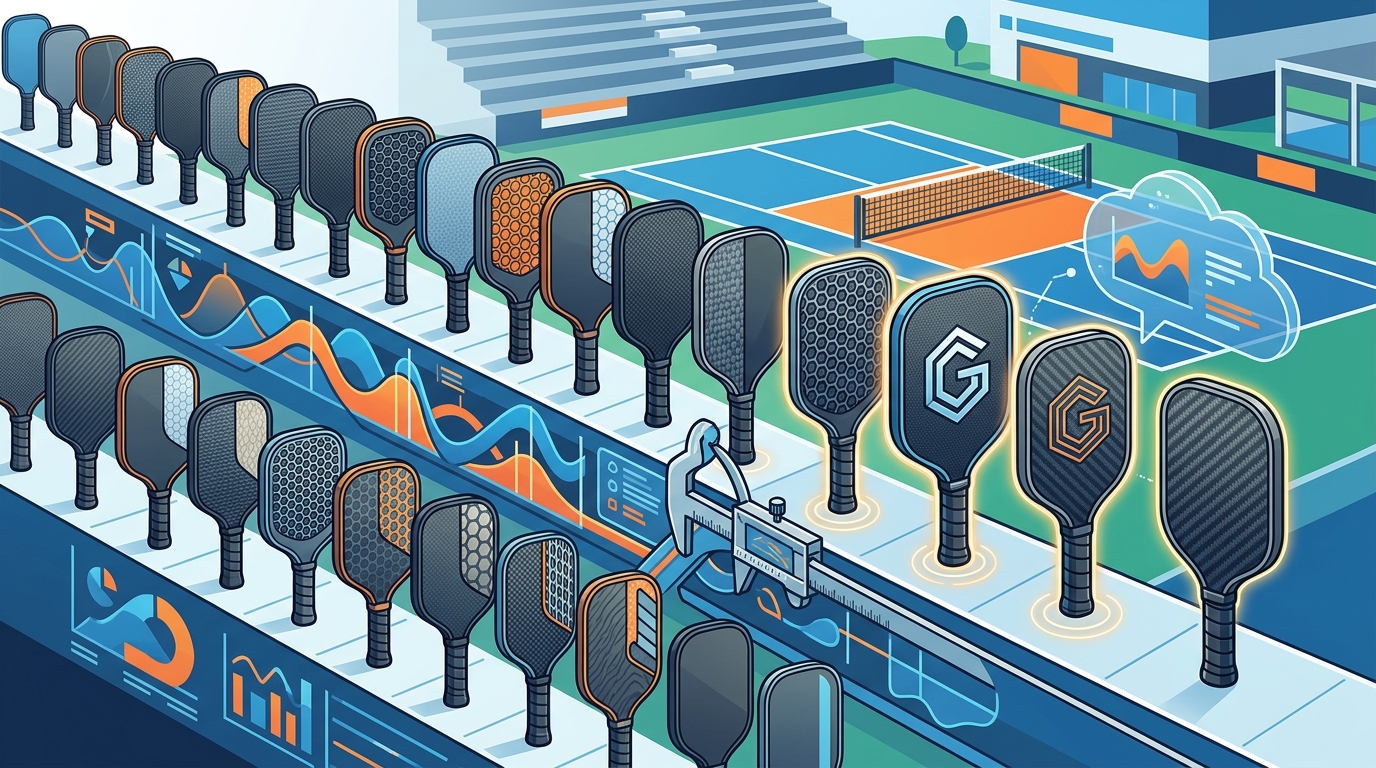
Core Technology: Foam vs. Honeycomb
For most of pickleball's history, paddles relied on polypropylene honeycomb cores. These cores were affordable but could compress over time and deliver inconsistent feel. Full-foam and foam-enhanced cores now dominate the high-performance conversation, as detailed in our guide to explosive pop and power.
Foam-Core Advantages
Foam-core technology is a construction method where dense foam replaces traditional honeycomb to provide more consistent energy return and broader sweet spots. Gen-4 foam paddles promise a unified feel from edge to edge with fewer dead zones and more predictable feedback. The result is a paddle that can hit hard on a full drive yet still give you the touch to reset at the kitchen line.
Pop-Based vs. Dwell-Based Power
Pop-based paddles launch the ball off the face almost instantly, rewarding compact swings with immediate pace. Dwell-based paddles hold the ball on the face a fraction longer, letting the core compress and spring it forward. Understanding which mechanism suits your game is the single biggest factor in choosing the right paddle, as we explain in our power paddle showdown.
Key Specs That Actually Matter
Spec sheets can be confusing. Here are the three variables that shape where any paddle falls on the power-control spectrum.
Core Thickness: Thinner cores (13 to 14 mm) produce more immediate pop. Thicker 16 mm cores increase dwell time and forgiveness on off-center hits.
Weight and Swing Weight: Midweight paddles in the 8.0 to 8.4 oz range tend to balance pace generation with the hand speed needed at the kitchen line. Swing weight, measured by independent reviewers using calibrated equipment, is a more reliable indicator of how a paddle plays than static weight alone.
Face Material: Raw carbon fiber delivers a crisper, more powerful response. Textured carbon adds spin. Fiberglass faces are known for producing the most initial pop, while many 2026 paddles use Toray T700 carbon for a balance of grit, durability, and energy return.
2026 Paddle Comparison Table
| Paddle | Core Type | Thickness | Best For | Price Range |
|---|---|---|---|---|
| JOOLA Ben Johns Pro V | Foam hybrid (KineticFrame) | 16 mm | Advanced all-court | $299 |
| Honolulu J2CR Crystal Blue | Foam | 16 mm | All levels (best value) | $175 to $195 |
| RPM Friction Pro V2 | Foam hybrid | 14/16 mm options | Spin-focused players | $200 to $230 |
| Selkirk Boomstik Elongated | Foam | 16 mm | Power baseline players | $333 |
| Engage Alpha Pro | Foam | 16 mm | Control-first players | $180 to $210 |
Prices and specifications can shift as manufacturers release updates. Browse the full Godfather Pickleball Performance collection for the latest curated options.
Matching Paddles to Your Skill Level
Beginners (2.5 to 3.5)
New players should prioritize a forgiving sweet spot and a midweight build. A 16 mm all-court paddle with a carbon-fiber face provides a solid foundation without overwhelming the player with power they cannot yet control. Explore our beginner paddle selection for options tested with newer players in mind.
Intermediate (3.5 to 4.5)
At this level, dwell time, surface texture, and balance point start to matter more. According to a USA Pickleball equipment survey, roughly 68% of players who upgraded from a recreational paddle to a mid-tier performance paddle reported noticeable improvement within 30 days.
Advanced (4.5+)
Advanced players typically know whether they prefer pop or dwell. The JOOLA Pro V series and the RPM Friction Pro remain favorites among top competitors. Paddle selection at this level should align with playing style and DUPR rating to support continued development.
Key Takeaways
- All-court paddles that balance power, control, and spin are the top choice for players at every level in 2026.
- Foam-core and foam-hybrid technology has replaced traditional honeycomb in most high-performance paddles.
- Core thickness (14 mm vs. 16 mm) is the fastest way to shift between pop and dwell characteristics.
- Swing weight matters more than static weight when predicting on-court paddle behavior.
- Beginners should focus on forgiveness and sweet-spot size rather than chasing maximum power.
- The Honolulu J2CR Crystal Blue and JOOLA Pro V represent the top-rated options for value and premium performance, respectively.
- Godfather Pickleball offers a 60-day risk-free trial so you can test any paddle on court before committing.
Frequently Asked Questions
What is the best pickleball paddle for beginners in 2026?
A 16 mm all-court paddle with a foam or polypropylene core and a carbon-fiber face is ideal for beginners. It provides a large sweet spot and forgiving feel that helps newer players develop consistency without being overwhelmed by power.
Are foam-core paddles better than honeycomb?
Foam cores offer more consistent energy return, less vibration, and broader sweet spots than traditional honeycomb. They tend to be more durable as well. However, some players still prefer the crisp, immediate pop of a high-quality polypropylene core.
How much should I spend on a pickleball paddle?
Quality all-court paddles in 2026 range from $100 to $300. Mid-range options between $150 and $200 often deliver 85% or more of the performance of premium models. Godfather Pickleball curates paddles at multiple price tiers so you do not have to overspend.
What does swing weight mean in pickleball?
Swing weight is a measurement of how heavy a paddle feels during a swing, accounting for weight distribution and balance point. It is a more accurate predictor of power and maneuverability than the static weight printed on the spec sheet.
Do professional players really use the same paddles available to consumers?
Yes. Models like the JOOLA Ben Johns Perseus Pro V and the RPM Friction Pro are the same paddles used by top professionals. Godfather Pickleball was built by a pro player agency that represents over 100 champions, giving the team firsthand insight into what the pros actually play with.
What is the difference between elongated and standard paddle shapes?
Elongated paddles provide extra reach and leverage on groundstrokes but have a slightly smaller hitting surface. Standard (widebody) shapes offer a larger sweet spot and better forgiveness, making them a popular choice for doubles-focused and kitchen-line players.
How often should I replace my pickleball paddle?
Most paddles maintain peak performance for 6 to 12 months of regular play. Surface grit wears down over time, reducing spin generation. If you notice your serves losing spin or your drives losing pop, it may be time for a replacement.
Does Godfather Pickleball offer a trial period?
Yes. Godfather Pickleball provides a 60-day risk-free trial. Play with the paddle, test it in games and drills, and return it within 60 days for a full refund if it is not the right fit.
Find Your Perfect Paddle at Godfather Pickleball
The right paddle is the one that matches your playing style, skill level, and budget. Stop guessing and start playing with pro-tested gear curated by an agency that knows the sport from the inside. Browse the full paddle collection at Godfather Pickleball and take advantage of the 60-day risk-free trial to find the paddle that elevates your game.