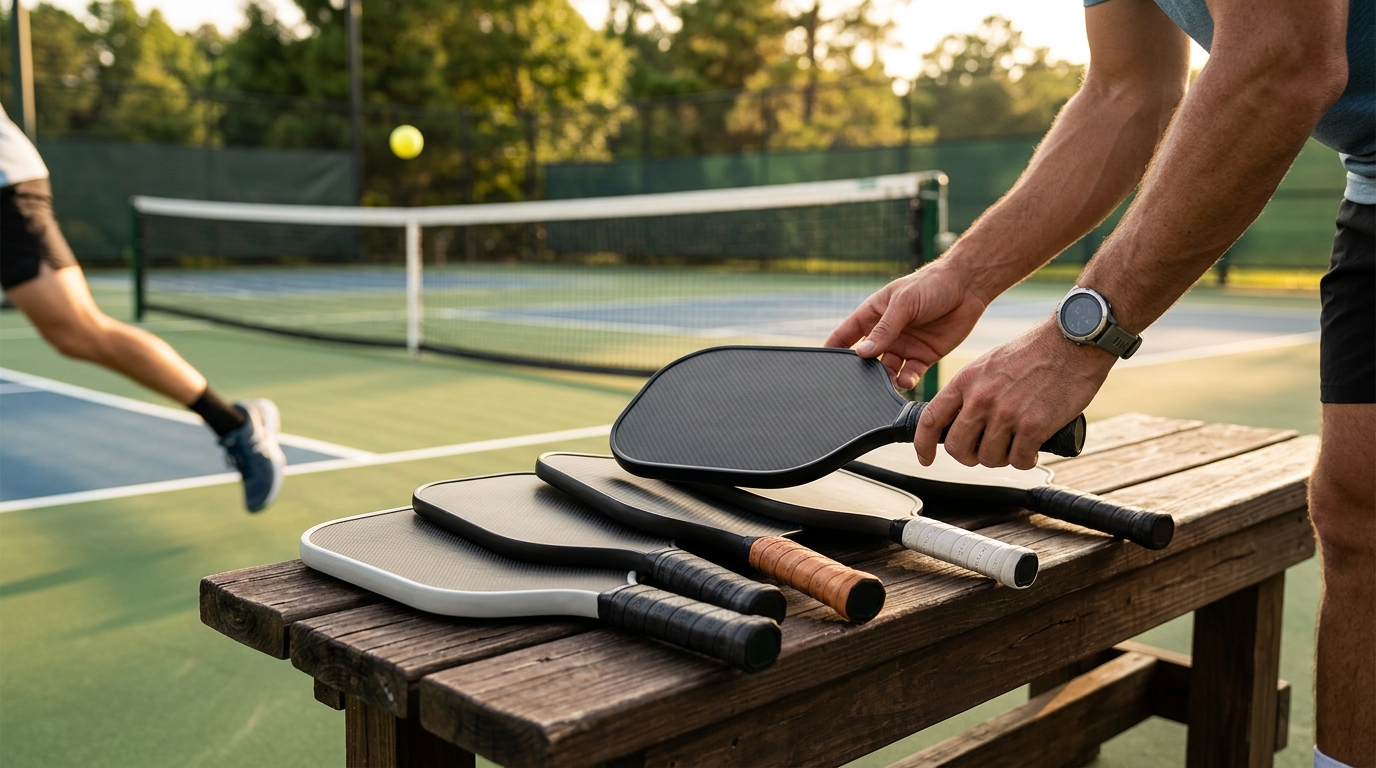
With over 24.3 million Americans now playing pickleball and paddle technology evolving faster than ever, finding the single best paddle for your game can feel overwhelming. Whether you are a beginner learning dinks or a tournament competitor chasing podiums, the right paddle balances power, control, spin, and forgiveness without forcing you into tradeoffs. This guide breaks down what makes a paddle truly great across all player levels in 2026, compares the top contenders side by side, and helps you choose the one that will genuinely elevate your play. At Godfather Pickleball, every paddle we stock is pro-tested and curated for exactly this purpose.
Why Paddle Choice Matters More Than Ever
Pickleball is no longer a backyard pastime. According to the Sports & Fitness Industry Association, participation grew from 4.2 million players in 2020 to over 24 million in 2025, a 479% increase. That explosive growth has driven a wave of paddle innovation that makes 2024 models feel outdated.
In 2024 alone, USA Pickleball approved 1,225 new paddles and registered 476 new manufacturers. With that many options flooding the market, understanding what separates a game-changing paddle from a marketing gimmick is essential for players at every rating.
What Makes a Paddle Great for All Levels
An all-court pickleball paddle is a paddle that balances power, control, and forgiveness without forcing you into one extreme style of play. The best options in 2026 share several measurable traits.
Sweet Spot Size and Forgiveness
Beginners need a large, forgiving sweet spot to compensate for inconsistent contact. Advanced players benefit from the same stability during fast hand battles at the kitchen line. Wider and standard body shapes generally deliver the most predictable contact zone.
Controlled Power Output
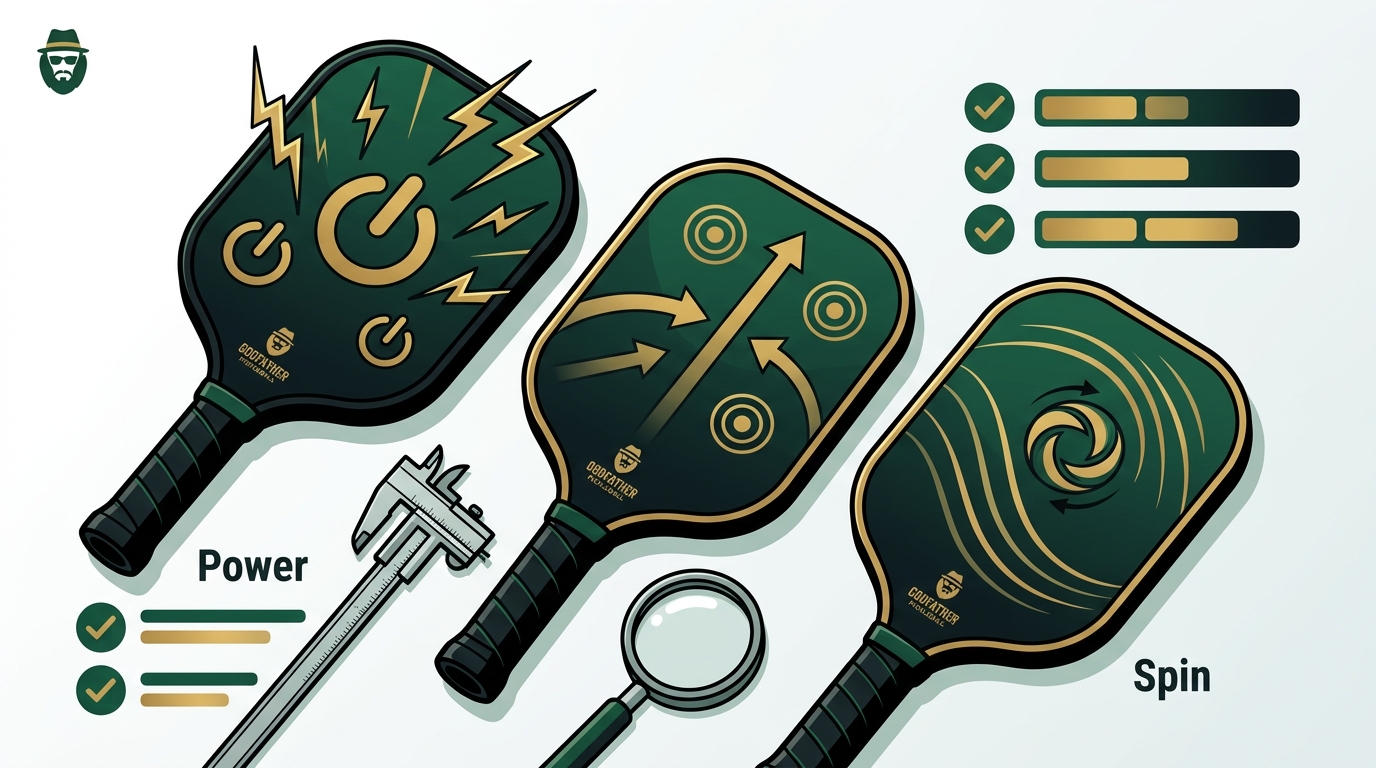
Raw power alone is not the goal. The best paddles deliver what reviewers call "controllable power," meaning you can hit hard on drives without sending dinks and resets long. A 16 mm core thickness is the most popular choice for this balance in 2026.
Spin and Surface Grit
Surface texture is the primary driver of spin generation. Raw carbon fiber faces with lasting grit allow players to shape shots with topspin and slice, a skill that matters from recreational play through professional competition. As our guide to pop and power paddles explains, face material directly impacts both spin rates and energy return.
Top Pickleball Paddles for 2026
After reviewing independent testing data from sources that have measured hundreds of paddles on radar guns and spin sensors, these models consistently earn top marks for cross-level performance.
JOOLA Ben Johns Pro V (Perseus)
JOOLA Pro V is the 2026 flagship paddle of Ben Johns, widely considered the greatest pickleball player in history. It features the new KineticFrame technology that flexes on impact and recovers quickly, minimizing off-center deviation. Priced at $299.95, it sits at the premium end but delivers what multiple reviewers call the most premium feel on the market.
Honolulu J2CR Crystal Blue
This paddle has emerged as the best value performer of 2026. Its long-lasting grit surface generates massive spin without degrading quickly, and it balances spin, control, and power at a price under $200. Multiple independent testers rank it as their overall top pick.
RPM Friction Pro
Developed with pro player James Ignatowich, the Friction Pro is available in four core configurations (16 mm and 14 mm, elongated and widebody). This versatility lets players at any level dial in their preferred power-to-control ratio. It consistently earns praise for strong all-around performance with great spin and easy control.
Side-by-Side Paddle Comparison
| Paddle | Core | Thickness | Shape | Price (MSRP) | Best For |
|---|---|---|---|---|---|
| JOOLA Pro V Perseus | Foam-enhanced | 16 mm | Elongated | $299.95 | Advanced / competitive |
| Honolulu J2CR Crystal Blue | Hybrid foam | 16 mm | Elongated | ~$195 | All levels / best value |
| RPM Friction Pro V2 | Poly honeycomb | 16 mm / 14 mm | Elongated or widebody | ~$230 | Intermediate to pro |
| Bread & Butter Loco | Thermoformed | 16 mm | 3 shape options | Under $200 | Power-focused all levels |
| Vatic Pro Saga | Poly honeycomb | 16 mm | Elongated | $99.99 | Budget all levels |
For a deeper breakdown of how these specs translate to on-court feel, read our paddle buying guide with features compared side by side.
Understanding Core Technology: Foam vs. Honeycomb
Core technology is the engineering foundation that determines how a paddle feels and performs. Two main types dominate the 2026 market.
Polypropylene honeycomb core is the traditional construction that has powered pickleball paddles for years. These cores are affordable and effective but can compress over time. A foam core is a newer construction that uses injected or layered foam to provide more consistent energy return, less vibration, and broader sweet spots.
Gen-4 foam paddles represent the latest evolution, promising a unified feel from edge to edge with fewer dead zones. As our power paddle showdown article details, foam-core paddles can deliver both the pop of a thin core and the stability of a thick one. The market has shifted heavily toward paddles that combine controlled power, forgiveness, and stability rather than pure trampoline-effect power.
How to Match a Paddle to Your Skill Level
Beginners (2.0 to 3.0)
Start with a widebody or standard shape paddle with a 16 mm core. Forgiveness and a large sweet spot matter more than raw performance at this stage. Budget-friendly options like the Vatic Pro Saga deliver genuine quality without overspending.
Intermediate Players (3.5 to 4.0)
This is where paddle choice starts to make a measurable difference. According to a USA Pickleball equipment survey, roughly 68% of players who upgraded from a recreational paddle to a mid-tier performance paddle reported noticeable improvement within 30 days. Hybrid shapes and foam-enhanced cores are ideal here.
Advanced and Tournament Players (4.5+)
At this level, you need a paddle that rewards precision without punishing off-center hits. The JOOLA Pro V and RPM Friction Pro are both favorites among competitive players who demand top-tier spin, power, and feel. Explore pro player gear picks to see what touring athletes actually use.
Key Takeaways
- An all-court paddle is the best choice for most players because it balances power, control, and forgiveness across every situation.
- The Honolulu J2CR Crystal Blue leads many 2026 independent rankings as the top overall paddle for its combination of spin, durability, and value.
- The JOOLA Pro V Perseus is the premium benchmark, used by Ben Johns and praised for its KineticFrame technology and plush feel.
- Core thickness of 16 mm offers the best blend of dwell time and forgiveness for players at all levels.
- Foam-core and foam-enhanced constructions have overtaken traditional honeycomb as the dominant technology in high-performance paddles.
- Surface grit longevity is now a key differentiator; paddles that maintain spin generation over months offer better long-term value.
- Matching paddle shape (widebody, hybrid, elongated) to your skill level and playing style matters more than brand name or price.
Frequently Asked Questions
What is the best pickleball paddle for beginners in 2026?
Beginners should look for a widebody paddle with a 16 mm core that prioritizes forgiveness and a large sweet spot. The Vatic Pro Saga at $99.99 is a popular choice that delivers real performance without a steep investment. As your skills develop, you can transition to a more specialized shape.
Is a foam core or honeycomb core paddle better?
Foam cores generally provide more consistent energy return, less vibration, and broader sweet spots compared to traditional polypropylene honeycomb. However, some players prefer the crisp, immediate pop of honeycomb. The best choice depends on whether you favor dwell-based power or pop-based power.
How much should I spend on a pickleball paddle?
Quality paddles range from about $100 for excellent budget options to $300+ for tour-level models. The $150 to $200 range offers the strongest price-to-performance ratio in 2026, with paddles like the Honolulu J2CR delivering roughly 85% of the performance of flagship models at a fraction of the cost.
What paddle does Ben Johns use?
Ben Johns uses the JOOLA Pro V Perseus, the 2026 update to his signature paddle line. It features KineticFrame technology and is priced at $299.95. He is widely considered the greatest pickleball player ever, and his paddle is designed for all-court power with a plush, premium feel.
Does paddle shape really matter?
Yes. Elongated paddles offer more reach and leverage on groundstrokes but have a smaller sweet spot. Widebody paddles provide the largest sweet spot and most stability. Hybrid shapes split the difference. Beginners and intermediates generally benefit from widebody or hybrid shapes before moving to elongated designs.
How often should I replace my pickleball paddle?
Most paddles maintain peak performance for 6 to 12 months of regular play. Surface grit wears down over time, reducing spin generation. If you notice your shots are flatter or less consistent, it is likely time for a replacement. Some 2026 paddles feature longer-lasting grit that extends this window.
What does PBCOR mean for pickleball paddles?
PBCOR stands for Paddle Ball Coefficient of Restitution. It is a measurement introduced by USA Pickleball to standardize how much energy a paddle returns to the ball. Paddles must fall below a set PBCOR threshold to be approved for sanctioned play, ensuring fair competition.
Where can I find pro-tested paddles curated for all levels?
Godfather Pickleball stocks paddles across every category and playing style, organized by core type, shape, and price so you can find the right fit whether you are just starting or competing at a high level.
Find Your Perfect Paddle
The best paddle is the one that matches your playing style, skill level, and budget. Stop guessing and start playing with equipment that is built for your game. Browse the full paddle collection at Godfather Pickleball to explore pro-tested options curated for every level of play, and take the first step toward elevating your performance on the court.