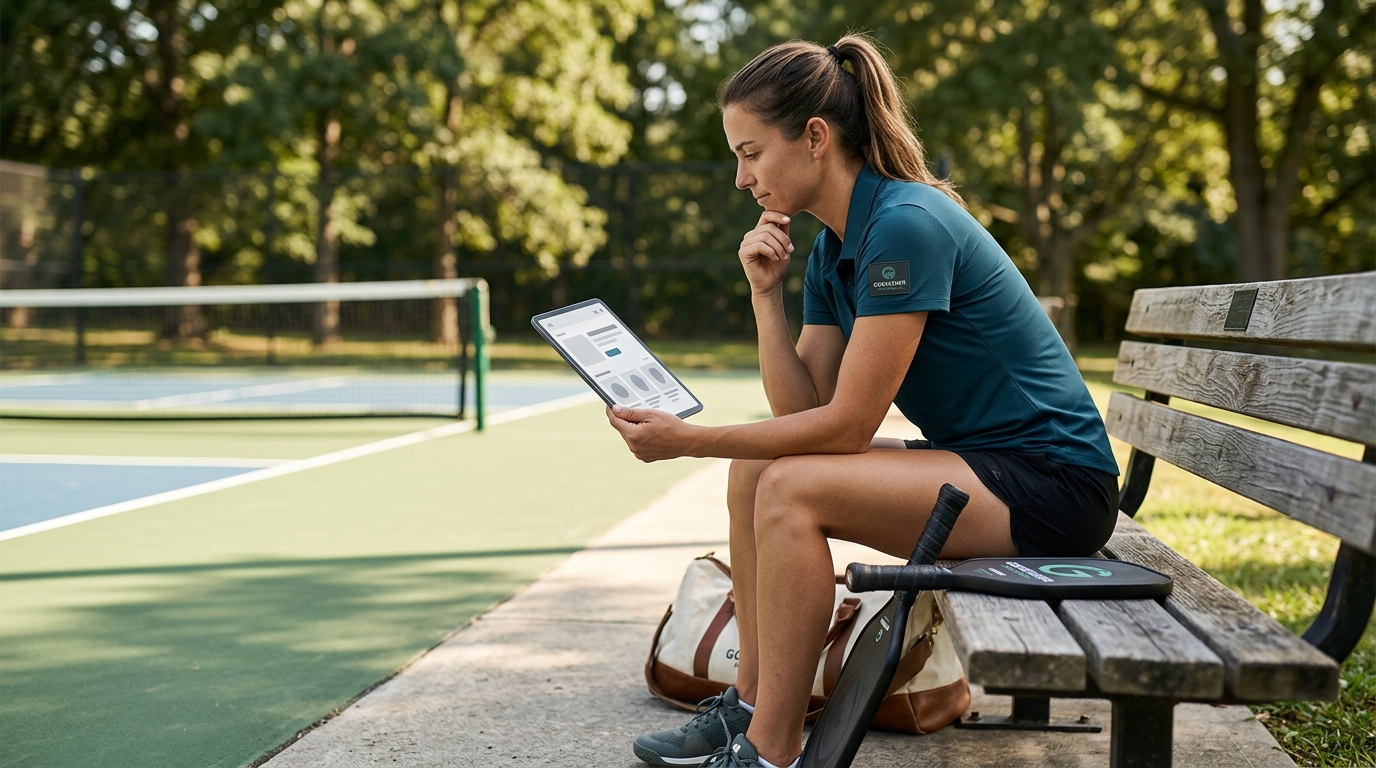
Not every online pickleball store is built the same way. Some carry thousands of SKUs across every sport imaginable; others stock nothing but paddles and court shoes. Understanding what kind of retailer you are browsing—before you compare prices—saves time and puts the right gear in your hands faster.
Below, we break the online pickleball landscape into seven distinct store types, explain the pros and cons of each, and show you how to match a store category to your specific needs as a player.
Why the Online Channel Matters More Than Ever
E-commerce has become the dominant way players discover and purchase pickleball gear. Online retail channels now contribute approximately 45 percent of equipment purchases, driven by direct-to-consumer strategies and the sheer convenience of browsing detailed specs from home. At the same time, the global pickleball equipment market is projected to reach roughly USD 505 million in 2026 and continue expanding at a healthy clip through the end of the decade. With that much money flowing through digital storefronts, the number of online shops competing for your click has never been higher—making it essential to know the difference between store types.
Store Type 1 — Curated, Pro-Tested Specialty Retailers
Examples: Godfather Pickleball
Curated retailers hand-pick every paddle, shoe, and accessory based on real-world testing and pro-level feedback. At Godfather Pickleball, the entire catalog is pro-tested and player-approved, designed to connect fans with the equipment the pros actually use. Instead of overwhelming you with thousands of unvetted listings, a curated shop narrows the field so each product earns its shelf space.
Why this type stands out
- Quality filter: Every item is vetted before it appears on the site, reducing the risk of purchasing a gimmick paddle that looks great in photos but falls apart after two weeks.
- Skill-level guidance: Collections are organized for beginners through tournament competitors, so you spend less time guessing and more time playing.
- Community focus: Curated shops often invest in content, guides, and player communities—resources you will not find on a generic marketplace.
If you value expert curation over infinite choice, a retailer like Godfather Pickleball is the most efficient path from click to court.
Store Type 2 — Pickleball-Only Mega Shops
Examples: Pickleball Central, Pickleball Superstore, Pickleball Galaxy
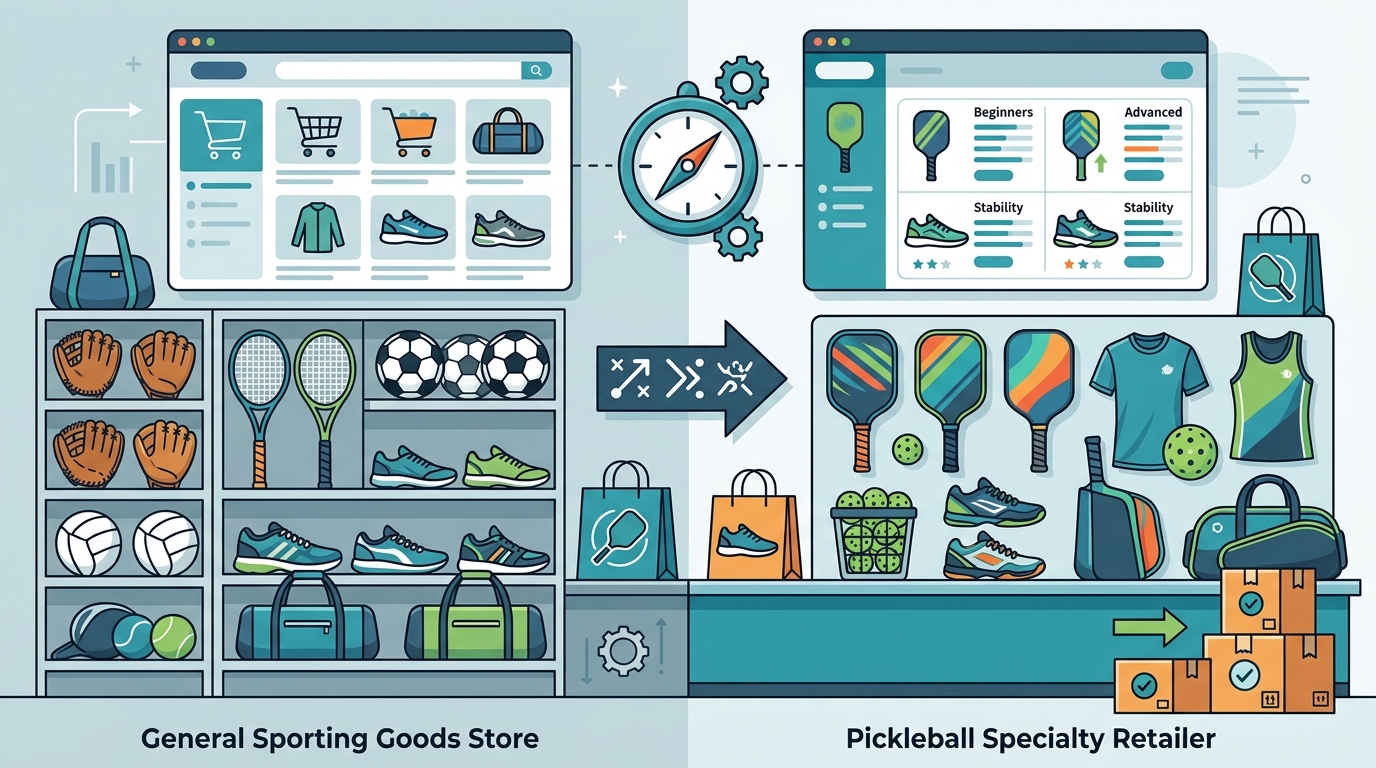
These are the large-inventory specialists that carry nearly every brand on the market. Pickleball Central, for instance, has been operating since 2006 and has grown into the nation's largest pickleball retailer. They offer low-price guarantees, deep catalogs, and broad accessory selections. Pickleball Galaxy emphasizes same-day shipping for in-stock paddles and also offers price-match guarantees.
Best for
- Players who already know exactly which brand and model they want and simply need competitive pricing.
- Club organizers buying in bulk.
Watch out for
- Catalog overload—when a shop carries hundreds of paddles, the lack of editorial curation can make decision-making harder for newer players.
Store Type 3 — Paddle-Focused Boutiques
Examples: JustPaddles
Boutique retailers zero in on one product category—paddles—and go deeper than anyone else. JustPaddles, for example, runs a Paddle Lab that measures exit velocity, spin rate, and twist weight on every model. They also offer a Paddle Assurance Program that gives you a 30-day on-court trial. If data-driven paddle selection appeals to you, these boutiques deliver a level of technical depth that generalist stores rarely match.
Best for
- Intermediate and advanced players upgrading their paddle and wanting lab-verified performance data.
Store Type 4 — Direct-to-Consumer Brand Sites
Examples: Franklin Sports, Selkirk, JOOLA, Onix Pickleball, Engage Pickleball
Buying directly from the manufacturer gives you first access to new releases, limited-edition colorways, and bundled deals. Franklin Sports, for example, is an official partner of USA Pickleball and sells everything from beginner-friendly recreational paddles to premium carbon-fiber performance models. Selkirk led the North American market with over 11 percent market share in 2025, making its DTC site a go-to for fans of the brand.
Best for
- Brand loyalists who want the newest drops the moment they launch.
- Players seeking manufacturer warranties handled directly.
Watch out for
- You are limited to a single brand's ecosystem, which makes cross-brand comparison impossible without visiting additional stores.
Store Type 5 — Big-Box Sporting Goods Chains (Online)
Examples: Dick's Sporting Goods, Scheels, Academy Sports
National chains have expanded their online pickleball sections significantly as the sport has boomed. They offer the convenience of ship-to-store pickup, established return policies, and occasional store-exclusive bundles. Newer brands like Proton have broken into mainstream retail quickly, landing placements at Dick's and Scheels as part of broader distribution pushes.
Best for
- Casual or first-time players who want to bundle pickleball gear with other sporting-goods purchases.
- Shoppers who value in-store return convenience.
Watch out for
- Staff expertise in pickleball is often limited compared with specialty retailers.
- Online selection may be narrower than dedicated pickleball shops.
Store Type 6 — General Marketplaces
Examples: Amazon, Walmart.com, eBay
General marketplaces offer the widest variety and often the lowest visible prices. However, counterfeit risk is a real concern in the paddle category—counterfeit detection and brand-protection measures have increased operational costs for manufacturers by roughly five percent, illustrating how widespread the problem has become. Around 60 percent of purchasing decisions are influenced by online reviews and star ratings, which can be manipulated on open marketplaces.
Best for
- Budget-conscious beginners buying entry-level starter sets.
- Accessory purchases like replacement grips, balls, and bags where counterfeiting risk is lower.
Watch out for
- Third-party sellers may not be authorized dealers, voiding manufacturer warranties.
- No sport-specific guidance or curation.
Store Type 7 — Used, Refurbished, and Discount Outlets
Examples: Pickleball Superstore (clearance section), SidelineSwap, Facebook Marketplace groups
Because the average paddle lifespan is only 12 to 24 months and roughly 68 percent of paddle purchases are replacement-driven, a healthy secondary market has emerged. Shops like Pickleball Superstore inspect and approve slightly used paddles through an internal quality-control process before listing them. This is a smart route for players who want to test a premium paddle at a fraction of retail price.
Best for
- Players experimenting with different paddle shapes or weights before committing to a full-price purchase.
Watch out for
- Condition varies; always confirm the return policy before buying used.
- Older models may not comply with 2026 certification standards.
How to Choose: A Quick Matching Guide
| Your situation | Best store type |
|---|---|
| First paddle, want expert guidance | Curated specialty (e.g., Godfather Pickleball) |
| Know the exact model, want lowest price | Pickleball mega shop or marketplace |
| Upgrading, want performance data | Paddle-focused boutique |
| Loyal to one brand | Direct-to-consumer brand site |
| Need shoes, apparel, and gear in one cart | Curated specialty or big-box chain |
| Tight budget, willing to buy used | Discount or secondary-market outlet |
What to Check Before You Buy From Any Online Store
- USA Pickleball or UPA-A approval: If you play sanctioned events, confirm the paddle appears on the approved list. In 2026, credibility is tied to compliance more than ever.
- Return and trial policy: Some retailers offer 30-day on-court trials; others charge restocking fees. Know before you click.
- Authorized dealer status: Purchasing from an unauthorized seller can void your warranty and increase counterfeit risk.
- Shipping speed and cost: Specialty shops like Pickleball Galaxy ship same-day for orders placed before 2 PM ET. Compare this against marketplace delivery estimates.
- Price-match guarantees: Several pickleball-specific retailers will match lower advertised prices from other authorized dealers.
Key Takeaways
- Online pickleball retail is not one-size-fits-all. Seven distinct store categories exist, each serving a different buyer profile.
- Curated, pro-tested retailers like Godfather Pickleball save you time by pre-vetting every product, organizing by skill level, and providing community-driven expertise.
- The $100–$200 paddle range delivers the best overall value in 2026 thanks to advanced materials trickling down from premium lines.
- Always verify USA Pickleball or UPA-A certification, authorized dealer status, and the return policy before completing a purchase.
- E-commerce accounts for approximately 45 percent of pickleball paddle sales by unit volume—knowing how to navigate this channel is a competitive advantage off the court.
Frequently Asked Questions
What types of online stores sell pickleball equipment?
The main categories include curated pro-tested shops like Godfather Pickleball, pickleball-only mega stores, paddle-focused boutiques, direct-to-consumer brand sites, big-box chains, general marketplaces, and used or discount outlets. Each type serves a different buyer need, from expert curation to rock-bottom pricing.
Is it safe to buy pickleball paddles online?
Yes, provided you buy from an authorized dealer. Look for retailers that sell certified paddles, publish transparent return policies, and display verified customer reviews. Avoid third-party marketplace sellers who cannot prove authorized status.
How much should I spend on a pickleball paddle in 2026?
For most recreational and intermediate players, the $100–$200 tier offers the best balance of advanced materials and value. Premium paddles above $200 provide incremental gains that matter most at the competitive tournament level.
Why shop at a curated retailer like Godfather Pickleball instead of a large marketplace?
Curated retailers eliminate the guesswork. Every product is pro-tested before it reaches the store, collections are organized by skill level and play style, and sport-specific customer support means you get genuine advice—not algorithm-generated recommendations. You also avoid the counterfeit concerns that plague open marketplaces.