
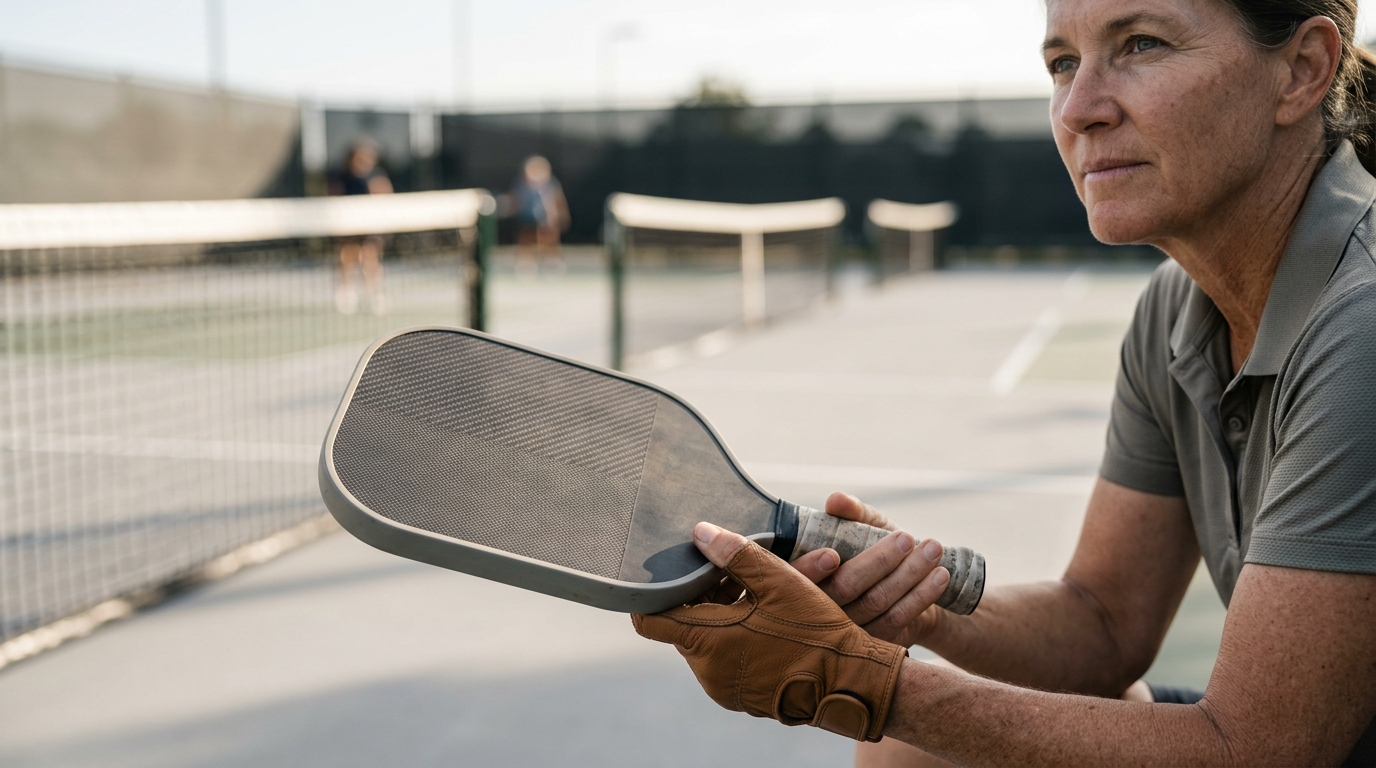
Every paddle spec on a product page tells you something—but not every spec changes how the ball comes off your strings (or, more accurately, your face). Some features reshape your entire shot selection. Others barely register once you step on the court.
This listicle from Godfather Pickleball isolates the seven features that create the biggest real-world difference, explains why each one matters, and gives you a quick self-test so you can figure out which end of the spectrum fits your game.
1. Core Material — The Engine Inside Every Shot
If the face is what you see, the core is what you feel. It determines power transfer, vibration, and even how loud the paddle sounds on contact.
Polymer Honeycomb
Polymer (polypropylene) honeycomb cores remain the most common option across all price points. They deliver a soft, forgiving feel with less vibration and quieter sound at impact. For most players below the advanced level, the extra control a polymer core provides is worth more than raw pop.
Nomex
Nomex is a heat-resistant aramid fiber formed into a hard honeycomb and dipped in resin. Nomex cores produce maximum power and a crisp, firm contact sensation—great for drives and overheads but harder to tame on touch shots. The trade-off: they are the loudest core type, which has made them a poor fit for noise-sensitive venues.
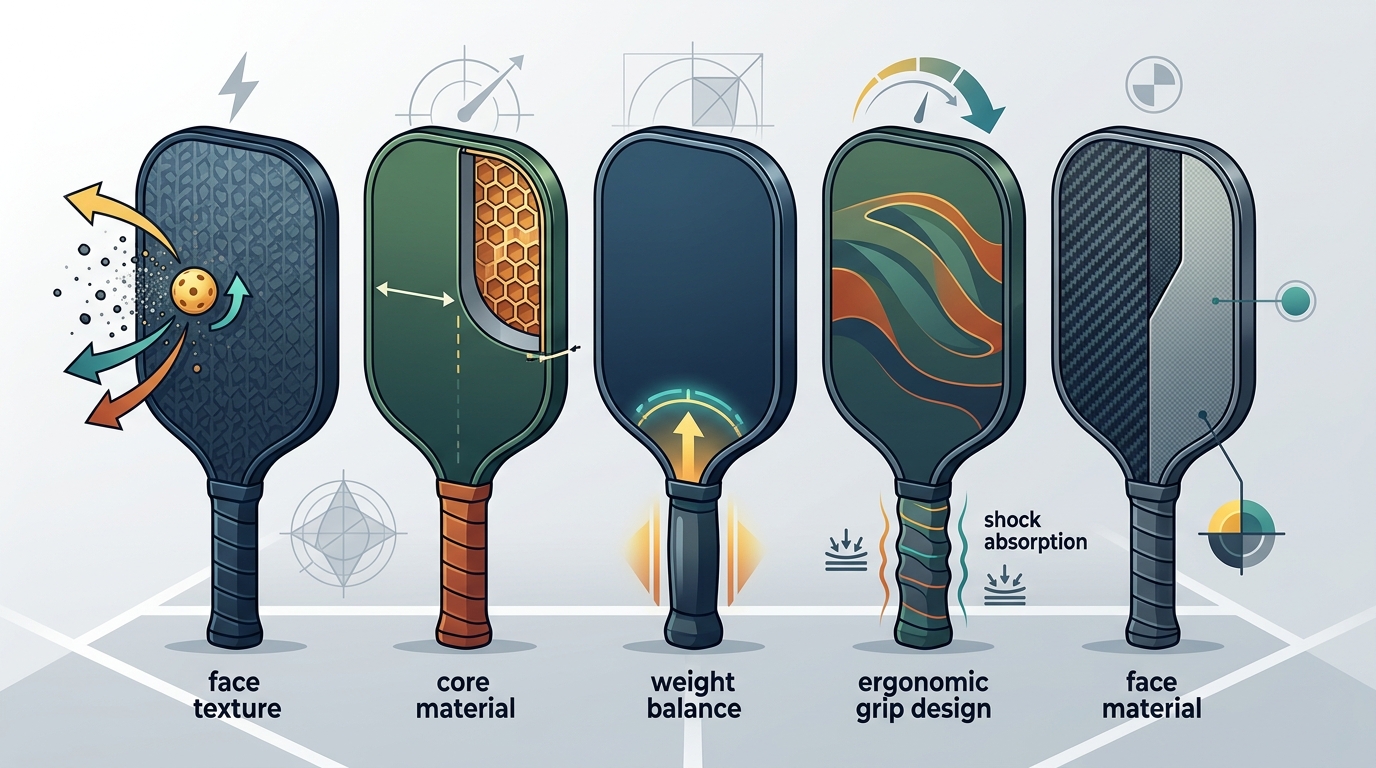
Foam Cores (Gen-4)
Foam-core construction is the biggest material shift in paddles in recent years. Full-foam and foam-enhanced designs deliver more consistent energy return, less vibration, and broader sweet spots than traditional honeycomb. In 2026, top reviewers predict increased experimentation with foam types like MPP, Pebax, TPU, and silicone foam to fine-tune feel even further.
Self-test: Borrow a polymer-core paddle and a foam-core paddle. Hit 20 dinks and 20 drives with each. If the foam paddle’s “pocketing” feel helps you place dinks more consistently, you lean toward feel. If the polymer’s crisper feedback helps you time drives, you may want a traditional honeycomb.
2. Core Thickness — The Control-vs-Power Dial
Most paddles range from 10 mm to 16 mm in thickness. This single number shifts the balance between touch and firepower more than almost any other spec.
- Thicker cores (13–16 mm) offer more control, a softer feel, and better shock absorption. They are ideal for players who prioritize precision and placement.
- Thinner cores (10–12 mm) are lighter and deliver more power. They suit aggressive players who rely on hard-hit drives and overhead slams but may provide less control and less vibration dampening.
Self-test: If you play mostly doubles and spend significant time at the kitchen line, start at 14–16 mm. If you play singles or favour baseline rallies, try 11–13 mm and see whether the extra pop outweighs the tighter sweet spot.
3. Face Surface & Texture — Where Spin Lives or Dies
The paddle face is your point of contact with the ball, and surface texture is now a top differentiator in paddle performance.
Carbon Fiber
Raw carbon fiber faces—especially those using high-grade materials like Toray T700—have a gritty texture that grips the ball and generates significant spin. Carbon fiber also spreads energy evenly across the face, giving you a consistent response whether you catch the sweet spot or catch an edge.
Fiberglass
Fiberglass faces provide a slightly softer, more flexible contact. They tend to offer more raw power (the ball “trampolines” off the surface) but less spin than carbon fiber. Budget-friendly and forgiving, fiberglass is a strong choice for beginners.
Texture Durability
In 2026, durable grit is being called the number-one surface trend. Without lasting texture, spin performance drops faster than many players realise. Look for brands that specify long-lasting or multi-layered grit technology rather than just out-of-wrapper spin numbers.
Self-test: Run your fingernail across the face of your current paddle. If it feels glassy smooth after a few months of play, your spin potential has likely dropped significantly—time to look at paddles with documented texture longevity.
4. Paddle Weight — The Comfort-and-Power Balancing Act
Paddle weight is one of the largest indicators of whether a paddle is right for you. Too light and you leave power and stability on the table; too heavy and you may be slow to reset and risk joint strain over long sessions.
| Category | Weight Range | Best For |
|---|---|---|
| Lightweight | 6.0–7.5 oz | Quick hands at the net, defensive players, those with wrist or elbow issues |
| Midweight | 7.6–8.4 oz | All-around versatility; most popular bracket for recreational and competitive players |
| Heavyweight | 8.5 oz + | Baseline power hitters who want maximum drive force |
Keep in mind that swing weight—how heavy the paddle feels in motion—matters just as much as static weight. Two paddles at 7.8 oz can feel completely different depending on where that mass is distributed.
Self-test: Play two full games with a midweight paddle. If your arm fatigues before your legs do, drop to the lightweight bracket. If you feel like you’re pushing the ball rather than striking it, move up.
5. Paddle Shape — Reach vs. Forgiveness
USA Pickleball rules cap the combined length and width at 24 inches, so every shape is a trade-off. As paddles get longer, they get narrower; as they get shorter, they get wider.
- Standard (approx. 16″ × 8″): Balanced power and control with a generous sweet spot. Suitable for any skill level and the most popular shape for doubles.
- Elongated (approx. 16.5″ × 7.5″): Extra reach and leverage for serves and drives. Ideal for singles, but the narrower body shrinks the sweet spot.
- Hybrid (approx. 16.25″ × 7.5–7.7″): Splits the difference—a touch more reach than standard without the full sweet-spot sacrifice of an elongated shape.
Self-test: Stand at the kitchen line and have a partner feed rapid-fire volleys to both your forehand and backhand. If you consistently clip the edge guard with an elongated paddle, a standard or hybrid shape will give you a more forgiving hitting zone.
6. Grip Size — The Overlooked Comfort Upgrade
Grip circumference typically ranges from 4.0 to 4.5 inches, and the wrong size creates problems that compound over hundreds of swings per session.
- Too small: Forces you to squeeze harder, increasing forearm tension and contributing to pickleball elbow and wrist pain.
- Too large: Restricts wrist mobility, reduces spin potential, and makes fast grip changes difficult during kitchen exchanges.
The most common size is 4.25 inches, which fits a broad range of adult hands. You can always build up a grip with overgrip tape, but making a grip smaller typically requires removing the factory grip entirely—a more involved process.
Self-test: Hold the paddle with your normal grip. Try to slide the index finger of your other hand between your fingertips and the heel of your gripping hand. It should fit snugly. If there’s a gap on either side, the grip is too large. If you have to spread your fingers to make room, it’s too small.
7. Noise Profile — A Feature You Didn’t Know You Needed
Noise used to be an afterthought. In 2026, it is a genuine performance and community consideration. Sound levels are increasingly regulated in tournament play and in residential areas with pickleball noise ordinances.
Modern quiet paddle designs use materials and construction methods that absorb sound rather than amplify it. Foam cores, polymer honeycomb, and purpose-built sound-dampening layers all reduce the sharp “ping” at contact. The bonus: many players report that quieter paddles also feel smoother on the wrist and arm, offering tangible performance benefits beyond good-neighbour etiquette.
Self-test: If your regular courts are near residential buildings or your community has discussed noise rules, a quiet-rated paddle protects your playing access and often delivers a more controlled feel.
Key Takeaways
- Core material sets your baseline feel—polymer for control, Nomex for power, foam for a broad sweet spot and modern feel.
- Core thickness is the quickest way to shift between touch and firepower (thicker = more control).
- Face texture durability matters more than out-of-wrapper spin; look for long-lasting grit technology.
- Weight affects both power and joint health—consider swing weight, not just static weight.
- Shape is a reach-vs-forgiveness trade-off dictated by the 24-inch rule.
- Grip size is the simplest upgrade most players skip; get it right to prevent elbow pain and unlock wrist snap.
- Noise profile protects your court access and can improve on-court comfort.
Find the Right Paddle at Godfather Pickleball
Godfather Pickleball curates pro-tested paddles, shoes, and gear for players at every level. Whether you’re after a foam-core powerhouse, a control-oriented 16 mm polymer paddle, or a quiet-rated option for your neighbourhood courts, we connect you with equipment trusted by athletes so you can elevate your play.
Frequently Asked Questions
What is the best core material for a beginner pickleball paddle?
Polymer honeycomb is the best starting point for beginners. It delivers a soft, forgiving feel with less vibration and a quieter sound, giving new players the control they need while they develop their technique.
Does paddle weight really matter?
Yes. A paddle that is too light sacrifices power and stability, while one that is too heavy slows your reaction time and can cause joint strain. Most recreational and competitive players land in the midweight range of 7.6–8.4 oz.
How do I measure my pickleball paddle grip size at home?
Hold your dominant hand open. Measure from the middle crease of your palm to the tip of your ring finger with a ruler. That measurement in inches approximates your ideal grip circumference. Most adults fall between 4.0 and 4.25 inches.
What is a foam-core paddle and is it worth the upgrade?
Foam-core paddles replace or supplement the traditional honeycomb grid with dense or floating foam, providing more consistent energy return, less vibration, and a broader sweet spot. If you value feel and a forgiving hitting zone, the upgrade is worthwhile.
Why does paddle face texture wear out and what can I do about it?
Repeated ball contact gradually smooths out surface grit, reducing spin potential. Choose paddles marketed with durable or long-lasting grit technology. Run your fingernail across the face periodically; if it glides smoothly instead of catching, spin performance has likely diminished.
Should I choose an elongated or standard-shaped paddle?
Elongated paddles offer extra reach and power, making them popular for singles. Standard paddles provide a larger sweet spot and better forgiveness, which suits doubles and all-around play. A hybrid shape splits the difference if you cannot decide.
Are quiet pickleball paddles less powerful?
Not necessarily. Modern quiet designs use foam cores and sound-dampening materials that absorb sharp impact noise without eliminating power. Many players find the controlled feel of a quiet paddle actually improves their all-around game.